


Authority to Publish: A Content Strategy Framework for Travel and Transportation Brands
Travel organizations have never had more opportunities to create content — or more competition for audience attention.
A cruise line can publish an article about the best restaurants in a destination. An airport can share a list of weekend getaways. An airline can recommend a city itinerary. The question is not whether these organizations can publish this content. The question is whether audiences believe they should.
For example, a cruise line may start by publishing content about its destinations. Over time, if it consistently provides accurate, insightful, and unique perspectives on coastal cultures, local communities, culinary traditions, and travel experiences, audiences may begin turning to that cruise line not just to book a voyage — but to understand the places they want to explore. That is the difference between publishing content and building authority.
The organizations that build lasting content advantage are not the ones that publish the most. They are the ones that identify the conversations they have earned the right to lead and consistently create valuable content around those topics. And they are trusted by their audiences as the go-to source of knowledge on these specific topics.
What Is Authority to Publish?
One of the most important — and least discussed — concepts in content strategy is authority to publish. For travel marketers, authority to publish is the strategic principle that answers one of the most important questions in a content strategy:
What does our organization know better than anyone else — and what topics do we want travelers to trust us to explain?
Many organizations believe they have the right to publish about any topic connected to their industry. A cruise company can write about travel. An airport can write about aviation. A destination marketing organization can write about tourism.
But the ability to publish does not automatically create authority. Authority is earned. Audiences — not organizations — grant authority over time. They decide which brands they trust, which sources they return to, and whose perspective influences their decisions.
Authority to publish is an organization’s earned right to lead the conversation on topics where it has unique expertise, experience, or public responsibility. It is established by consistently publishing credible, relevant, and valuable content that audiences trust and return to before seeking information from other sources.
Authority to publish is not granted by expertise alone. Expertise is the foundation, but authority is built through the consistent creation of accurate, original, and useful content that demonstrates a unique perspective.
When an organization achieves authority to publish, it moves beyond promoting products and services and begins shaping conversations, influencing decisions, and becoming the recognized voice audiences seek out.
Owning a topic is not about publishing the most content. It is about becoming the most valuable and trusted publisher in that subject area. And that honor is bestowed by the audience.
Expertise or Authority?
One of the biggest mistakes organizations make is confusing expertise with authority.
Expertise is what your organization knows.
Authority is what your audience believes you know — and trusts you to explain.
Many organizations have deep expertise but little authority because they communicate inconsistently, focus primarily on promotional content, or attempt to cover too many topics without establishing a clear point of view.
For example:
An airport has expertise in airport operations. But it earns authority when travelers, airlines, policymakers, businesses, and journalists rely on its content to understand the future of aviation, the passenger experience, sustainability, economic impact, and the role airports play in their communities. Authority is ultimately granted by the audience.
How to Build Authority
Successful content organizations do not try to own an entire industry. They own specific conversations within that industry.
The question is not:
“What topics can we publish about?”
The better question is:
“What topics do we want our organization to be known for five years from now?”
Authority to publish becomes the filter that determines what an organization should publish — not just what it can publish.
A strong authority strategy answers four questions:
- What do we know better than anyone else?
- What does our audience care about?
- Where do competitors publish weakly or generically?
- What business objective does this support?
The intersection of these answers reveals the topics where an organization can build lasting authority.

Case Study: Cultural Cruise Lines
To understand how authority to publish shapes content strategy, consider a fictional cruise company: Cultural Cruise Lines.
Company Description: What the Company Does
Cultural Cruise Lines is a premium cruise company specializing in immersive voyages that connect travelers with the history, culture, cuisine, and traditions of the world’s most fascinating coastal destinations.
Unlike traditional cruises focused primarily on transportation, entertainment, or onboard amenities, Cultural Cruise Lines designs itineraries around meaningful destination experiences, including extended port stays, expert-led excursions, local cultural partnerships, and enrichment programs that help travelers better understand the places they visit.
Its itineraries explore regions where maritime history and local culture are deeply connected, including Alaska’s Indigenous heritage and wilderness, Northern Europe’s coastal communities and Viking history, the Mediterranean’s ancient civilizations and culinary traditions, Japan’s island cultures and craftsmanship, and South America’s diverse coastal landscapes and communities.
Authority to publish
Cultural Cruise Lines should not try to own every travel topic. Its authority does not come from being a cruise company. Cruising is the product.
Its authority comes from its expertise and history in helping travelers understand the world through cultural discovery, local connections, and expert-guided exploration.
Authority Statement:
Cultural Cruise Lines has earned the authority to publish about helping travelers discover the world’s coastal cultures through authentic local experiences, historical insight, and destination expertise. Through its firsthand knowledge of destinations, relationships with local communities, and access to cultural experts, the company provides travelers with trusted perspectives on not only where to go, but why those places matter.
The conversation Cultural Cruise Lines has earned the right to lead is:
“How to travel deeper by connecting with the stories, people, traditions, and heritage that define the world’s coastal destinations.”
Proof Points for Authority
This cruise line does have several reasons that their audience could trust their expertise and bestow their authority.
1. Firsthand Destination Expertise
Cultural Cruise Lines does not rely solely on external research. Its teams visit destinations regularly, work with local partners, and understand the communities and cultures connected to the ports it serves.
This creates insights that general travel publishers cannot easily replicate.
2. Access to Cultural Experts and Local Voices
Through relationships with historians, chefs, conservationists, artists, Indigenous cultural leaders, and local guides, Cultural Cruise Lines can tell authentic stories from people who have deep connections to each destination.
3. A Unique Maritime Perspective
Many coastal destinations were shaped by the sea through trade, migration, exploration, and cultural exchange.
Cultural Cruise Lines has a unique perspective on how waterways connect people, places, and histories.
4. A Commitment to Enrichment, Not Just Promotion
The goal is not simply to sell voyages. The goal is to help travelers become more curious, informed, and connected to the places they visit. The content experience begins before booking and continues long after the journey ends.

Turning Authority Into Content Strategy
Authority to publish provides the foundation for content pillars, campaigns, and storytelling.
Content Pillars
Unlike campaigns, which are temporary activations designed to achieve specific objectives, content pillars are long-term strategic territories. They provide the foundation for editorial planning, helping organizations determine what they should publish, what stories they should tell, and what expertise they want audiences to associate with their brand.
The ideal number of content pillars is typically three to five. This range is broad enough to represent the organization’s expertise and audience interests while focused enough to build recognition and authority. Too few pillars can limit storytelling opportunities, while too many dilute the organization’s ability to become known for specific topics.
Pillar 1: Destination Stories
Understanding the Places We Visit
Purpose: Establish Cultural Cruise Lines as an expert interpreter of destinations.
Topics include:
- Hidden histories of coastal cities
- Cultural traditions and celebrations
- UNESCO heritage sites
- Stories behind iconic landmarks
Example content:
- The Untold Stories Behind Norway’s Coastal Villages
- Beyond the Acropolis: Discovering Greece Through Local Eyes
- Five Mediterranean Ports Where History Comes Alive
Pillar 2: People and Culture
The Human Stories Behind Every Destination
Purpose: Create emotional connections between travelers and communities.
Topics include:
- Local artisans
- Indigenous cultures
- Family-owned businesses
- Regional traditions
- Culinary heritage
Example content:
- Meet the Alaska Native Artists Preserving Ancient Traditions
- The Mediterranean Families Keeping Centuries-Old Recipes Alive
- Japanese Craftsmanship: Stories From Island Communities

Pillar 3: Culinary Discovery
Tasting the World Through Place
Purpose: Use food as a gateway to understanding culture.
Topics include:
- Regional ingredients
- Traditional cooking methods
- Local food histories
- Market experiences
- Chef partnerships
Example content:
- A Food Lover’s Guide to Mediterranean Coastal Markets
- The Flavors of Northern Europe: From Fjords to Family Kitchens
Pillar 4: Meaningful Travel
How to Explore the World More Deeply
Purpose: Establish Cultural Cruise Lines as a thought leader in intentional travel.
Topics include:
- Slow travel
- Responsible tourism
- Planning immersive journeys
- Connecting with local communities
Example content:
- Why Longer Port Visits Create Better Travel Experiences
- The Difference Between Seeing a Destination and Understanding It

Campaigns
Campaigns are temporary activations designed to achieve specific objectives.
Campaigns are typically designed to last three to twelve months, depending on the complexity of the objective, the size of the audience, and the amount of content required to build awareness and engagement. Larger strategic campaigns — such as a destination awareness initiative, brand platform, or thought leadership program — may continue for one to three years through evolving phases and new storytelling opportunities.
Unlike content pillars, campaigns are not intended to remain permanent. They should be reviewed regularly and refreshed when:
- The business objective has been achieved
- Audience interest or behavior changes
- New opportunities emerge
- The organization has exhausted the storytelling potential of the campaign
- Market conditions or strategic priorities shift
A healthy content strategy may include two to four active campaigns at any given time, with campaigns entering, evolving, or retiring throughout the year. Some campaigns may be seasonal or tied to specific moments, while others may become recurring annual programs.
Campaign 1: The World Beyond the Shore
Purpose: Show travelers that destinations are more than places to visit — they are stories shaped by people, history, and culture.
Content:
- “One Port, One Story” video series
- Historical destination guides
- Local voices and interviews
- Interactive cultural maps
Campaign 2: Meet the People Who Make a Place
Purpose: Highlight the people who preserve and define destination culture.
Content:
- Artisan profiles
- Chef interviews
- Local guide spotlights
- Community stories
Campaign 3: Taste the Destination
Purpose: Use cuisine as a lens for cultural discovery.
Content:
- Regional recipe collections
- Culinary guides
- Chef storytelling
- Market experiences
Campaign 4: Travel Deeper
Purpose: Position Cultural Cruise Lines as a leader in meaningful travel.
Content:
- Destination planning guides
- Expert advice
- Cultural education series
- First-time immersive travel resources
The Authority to Publish Flywheel
Authority grows through a continuous cycle:
Expertise → Trusted Content → Audience Engagement → Brand Authority → Stronger Relationships → More Unique Insights
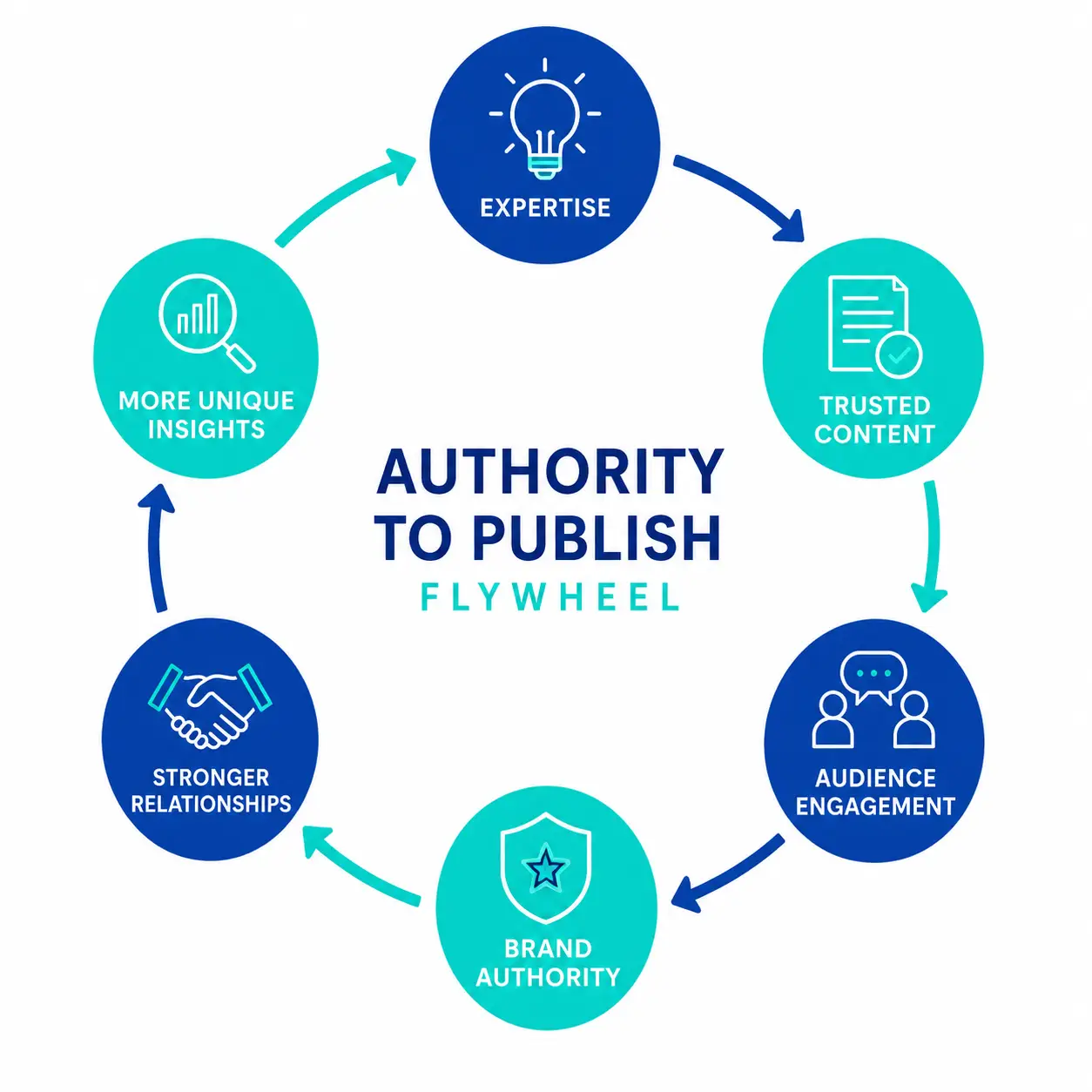
The strongest content organizations understand that authority is not created by publishing more. It’s created by becoming more valuable.
The ultimate question for every content team is:
What conversation has our organization earned the right to lead?
When that question guides strategy, content becomes more than a marketing channel. It becomes a competitive advantage — one built on trust, expertise, and a perspective audiences cannot find anywhere else.