


How to Create Precision Content in Travel Marketing
The travel industry isn’t hurting for “pretty.” We have plenty of epic views, gleaming cruise decks, and perfectly plated farm-to-table greens. Scroll any travel site and you’ll find the same sweeping landscapes and the same promise of an “unforgettable journey.” And yet, it all starts to feel like background noise.
The problem isn’t a lack of effort or a lack of dazzling vistas. It’s a lack of precision.
Here are the three biggest roadblocks in travel marketing — and how the best brands are breaking through.
1. Saying Nothing Different
Most travel marketing is interchangeable. If you swapped the logo with a competitor’s, would anyone notice?
We see the same buzzwords on loop: Authentic. Immersive. Once-in-a-lifetime. These aren’t bad words — they’re just empty. Without a specific point of view, they’re just filler.
- What’s missing: A clear stance on why this experience exists and exactly who it’s for
- What works: Specificity that draws a line in the sand
The Standout: G Adventures
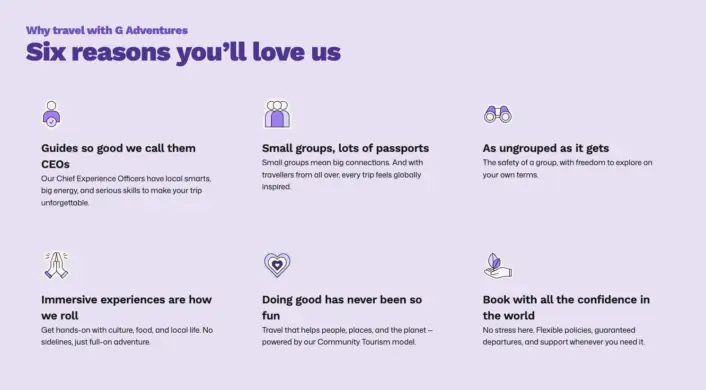
G Adventures doesn’t just sell trips; they sell a philosophy of “community tourism.” They use the standard industry buzzwords, but they back them up with a precise payoff for the traveler.
By defining clear “Travel Styles” — like Roamies for the social crowd or Local Living for the slow-paced — they filter the right travelers in and the wrong ones out. There’s no guessing. You either fit the vibe, or you don’t.
The Jaunt Takeaway: If your copy could belong to anyone, it belongs to no one. Be specific enough to be polarizing.
2. Describing the Trip, Not the Transformation
Most itineraries are built beautifully and marketed poorly. They focus on logistics: day-by-day breakdowns, inclusions, and transport.
But travelers don’t buy logistics. They buy who they become by the time they head home.
- What’s missing: The emotional outcome.
- What works: Showing the internal shift — the confidence, the connection, or the new perspective.
The Standout: Abercrombie & Kent
A&K doesn’t just sell five-star lodges; they sell access. They frame their private game drives and after-hours cultural tours as “insider” moments.
The subtext is powerful: This isn’t just a comfortable vacation; it’s an entry into a world most people never see. That is the transformation — moving from an observer to an insider.
The Jaunt Takeaway: Don’t just tell them what they’ll do. Show them who they’ll be.
Bonus read: Sell Transformation: An Emotional Marketing Strategy for Travel Brands

3. Trying to Speak to Everyone
This is where good brands go generic. In an effort to scale, the messaging gets diluted: “Something for everyone.” “Perfect for all ages.” When you try to speak to everyone, you stop resonating with anyone.
- What’s missing: A sharply defined traveler
- What works: Messaging that feels like a private conversation with one person
The Standout: Tauck’s Roam Series
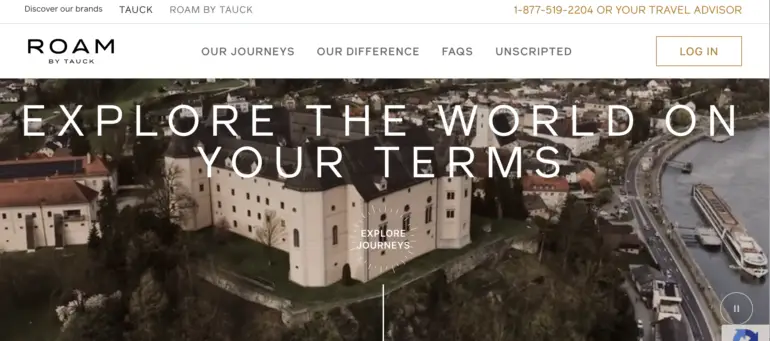
Tauck knows exactly who their traveler is, and they aren’t afraid to lean into it. The “Roam” collection is a surgical strike on the high-achieving Gen X and Millennial professional.
They use a “Half-On, Half-Off” philosophy that respects the traveler’s autonomy. By highlighting “un-scheduled” time and “active-by-design” elements like whitewater kayaking, they speak to the person who defines luxury as vitality, not just thread count.
They aren’t trying to win the retirement crowd or the budget backpacker. They are looking for the “Time-Poor, Experience-Hungry” professional who needs a deep reset.
The Jaunt Takeaway: When you narrow your audience, your message gets stronger — not smaller.
The Bottom Line
Travel marketing doesn’t need more content. It needs more clarity.
The brands that cut through the noise:
- Say something specific
- Sell transformation, not logistics
- Speak to a defined human being